 Canadian Thanksgiving Hosting
Turkey basics: sizing, thawing, roasting without stress
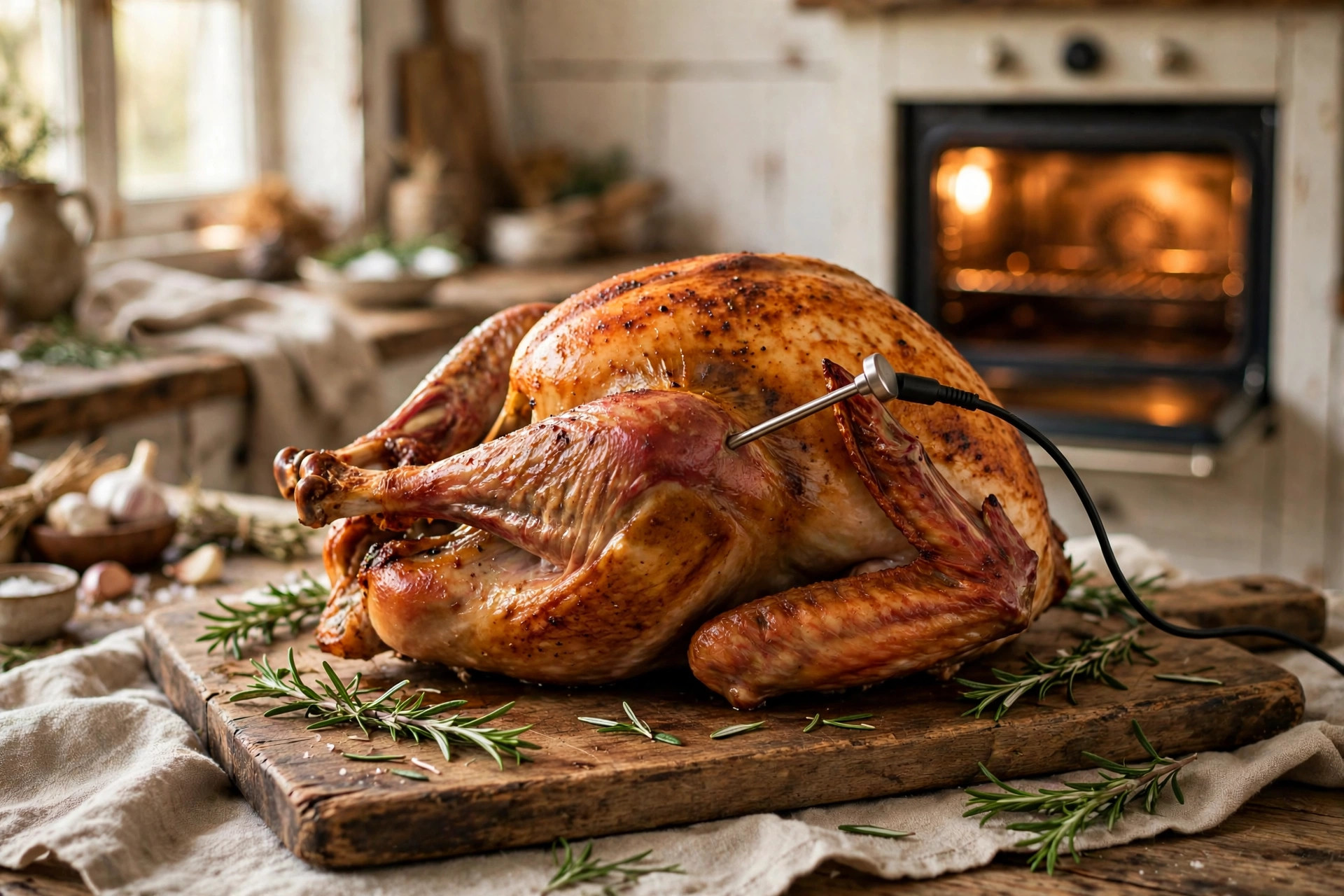
The turkey is the one part of Thanksgiving dinner people worry about, and it's the part with the least reason to worry. Roasting a turkey is not a skill test. It's three small decisions — how big, how thawed, how hot — and a thermometer does the rest.
How big a turkey to buy
The classic planning rule: about 1 pound (450 g) of turkey per guest. That covers dinner with a little to spare. If your crowd loves leftovers — and if you're reading the leftover game plan, they will — plan about 1½ pounds (680 g) per person.
| Guests | Buy this size |
|---|---|
| 4–6 | 6–9 lb (2.7–4 kg) |
| 8–10 | 10–15 lb (4.5–6.8 kg) |
| 12–14 | 15–21 lb (6.8–9.5 kg) |
| 16+ | Consider two smaller birds instead of one giant one |
That last row is a genuine pro tip: two 12-pound turkeys cook faster and more evenly than one 24-pounder, and a standard home oven handles them fine on two racks. Giant birds are also where dry-breast stories come from.
Thawing: the part people get wrong
The safe way to thaw is in the fridge, and it takes longer than anyone expects: roughly 24 hours for every 4–5 pounds (about 2 kg). A 15-pound bird needs about three full days. Count backward from cooking day and add a buffer day — a thawed turkey keeps fine in the fridge for a day or two, but a still-frozen one on Monday morning is a crisis.
- Thaw breast-side up on a tray (on the bottom shelf, so drips can't land on other food).
- Never thaw on the counter. The outside sits in the danger zone for hours while the inside stays frozen.
- Forgot to thaw in time? A turkey in its wrapper, submerged in cold water that you change every 30 minutes, thaws in roughly 30 minutes per pound. It works, but it means babysitting a sink — plan ahead instead.
Roasting: the simple method
You don't need a special technique. The reliable classic:
- Heat the oven to 325°F (165°C). Lower and slower beats hot and fast for an even, juicy bird.
- Prep the bird. Remove the giblets and neck from the cavities (check both ends), pat the skin dry with paper towels, and rub it with softened butter or oil plus salt and pepper. Tuck the wing tips under the body so they don't burn.
- Season the cavity simply. A halved onion, a lemon half, and a few herb sprigs are plenty. Skip stuffing the bird full — a loosely filled cavity cooks more evenly, and you can bake the rest of your stuffing in a dish (it browns better there).
- Roast breast-side up on a rack, tented loosely with foil. As a planning estimate, budget about 15 minutes per pound for an unstuffed bird at 325°F — but treat that as scheduling, not doneness.
- Use a thermometer. This is the whole secret. The turkey is done when the thickest part of the thigh reads 165°F (74°C), without touching bone. The breast often reads done earlier — trust the thigh. Guessing by time or by "the juices run clear" is how dry turkeys happen.
- Rest 20–30 minutes tented with foil before carving. The juices redistribute, the meat firms up for cleaner slices, and the oven is free for last-minute reheats.
Brining: optional, not required
A brine (salt water) or dry brine (salt rubbed on the bird a day ahead) does improve moisture, especially for the breast. But many store-bought turkeys are already "enhanced" with a salt solution — check the label, because brining an already-brined bird makes it salty. If the label mentions broth or salt solution, skip the brine and just season well.
Common turkey worries, answered
- "The skin is browning too fast." Tent it with foil. That's it. The foil comes off for the last 30 minutes if you want extra crispness.
- "The breast is done but the thighs aren't." Shield the breast with foil and give the thighs time — or next year, buy the two-smaller-birds combo.
- "I forgot the giblets inside." Everyone has done this. Pull them out when you notice; the turkey is fine.
- "It's done an hour early." Tent it with foil and let it rest longer — a rested turkey holds its heat remarkably well. Being done early beats being done late every single time.